



Why People Are Switching to Reusable Smoothiepussit
Walk down the baby-food aisle of any grocery store and you’ll see stacks of single-use fruit pouches, most of them destined for a landfill within minutes of being emptied. That’s the problem reusable silicone Smoothiepussit were built to solve.
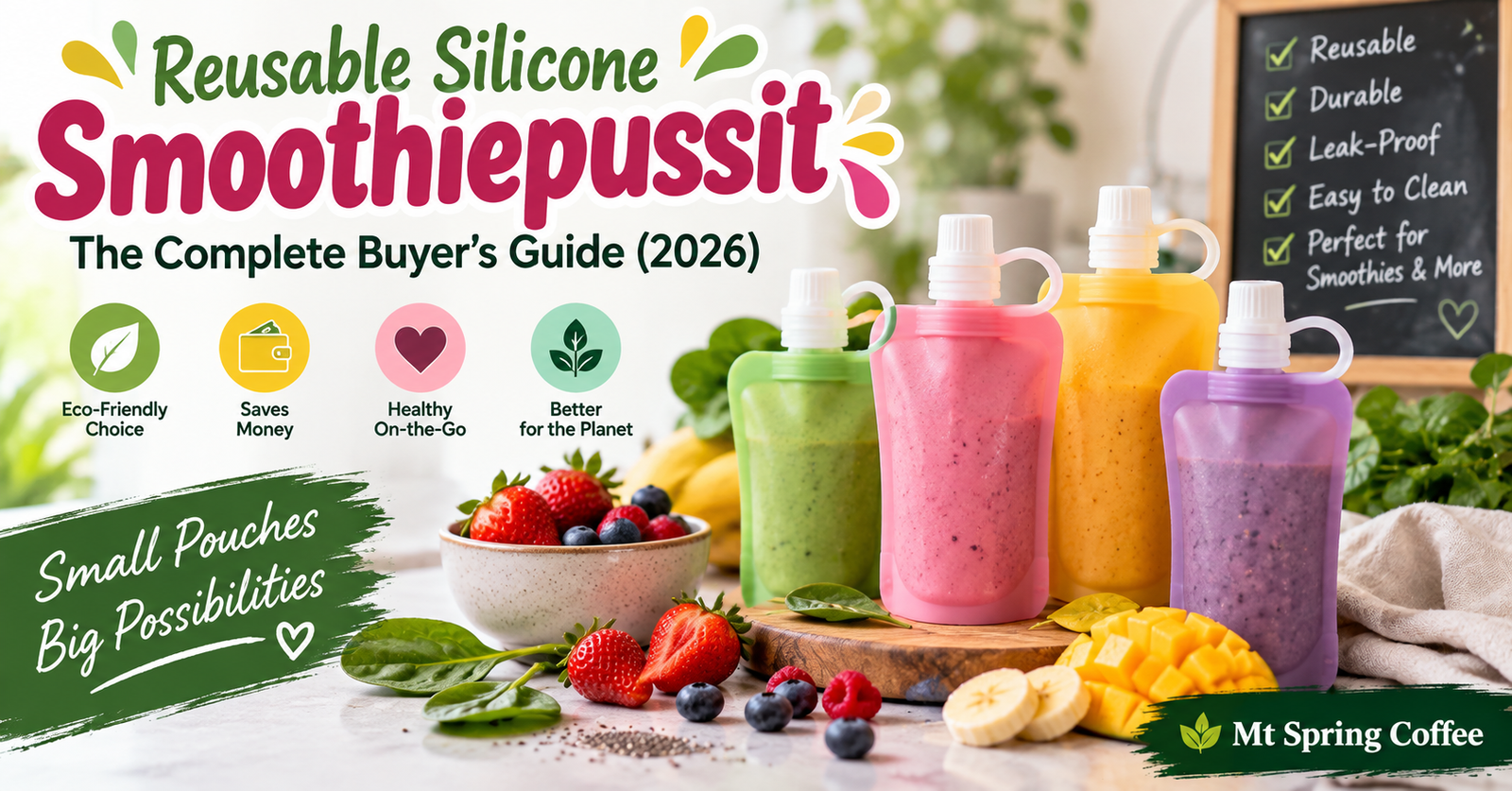
A reusable smoothie pouch is a soft, food-grade silicone container with a resealable spout that you fill yourself — with a homemade smoothie, a fruit purée, yogurt, or oatmeal — then wash and refill again and again. In Finland, where the category has been popular for over a decade, these are simply called smoothiepussit — literally “smoothie bags.” The idea has since spread well beyond Scandinavia, and you’ll now find dozens of brands selling their own version in the US, UK, and Australia.
This guide covers what these pouches actually are, how they compare to disposable pouches, what to look for before buying, and how to use them safely for babies, toddlers, and adults alike.
What Exactly Is a Silicone Smoothie Pouch?
At its core, a smoothie pouch is a squeeze container made from LFGB or platinum-grade silicone — the same medical-grade material used in baby bottle nipples and kitchen bakeware. Most designs share the same basic parts:
- A wide-mouth opening for pouring in smoothies, purées, or yogurt without a funnel
- A screw-on or snap-on spout with a valve (often an X-cut nozzle) that controls flow and reduces spills
- A flat, foldable body that lies down for storage or stands upright when filled, depending on the design
- A leak-resistant seal, so the pouch can go in a lunchbox, diaper bag, or gym bag without soaking everything around it
Unlike the plastic pouches sold in stores — which are meant to be used once and thrown away — these are designed for hundreds of fill-and-wash cycles.
Reusable vs. Disposable Pouches: A Quick Comparison
| Feature | Reusable Silicone Pouch | Single-Use Store Pouch |
| Cost per use | Roughly $0.10–$0.30 after the upfront purchase | $1.50–$3.00 per pouch |
| Material | Food-grade silicone (BPA, PVC, phthalate-free) | Multi-layer plastic laminate, rarely recyclable |
| Waste generated | Minimal — one pouch replaces hundreds of disposables | High — most end up in landfill |
| Contents | Whatever you blend yourself | Pre-packaged, often high in sugar |
| Temperature tolerance | Freezer and often microwave-safe (check brand specs) | Not designed for freezing or reheating |
| Longevity | Months to years with proper care | Single use |
The math tends to work out fast: a family that goes through even four store-bought pouches a week is spending $300–$600 a year on something a $15–$25 reusable set can replace many times over.
Who Actually Benefits From Them
It’s easy to assume these are strictly a baby-feeding product, but the use case is broader than that.
Parents of babies and toddlers use them for homemade purées, yogurt blends, and smoothies that toddlers can self-feed — a genuinely useful step in building independent eating skills. Pediatric feeding specialists generally note that pouches are a helpful tool early on, but shouldn’t fully replace spoon-feeding and chewing practice once a child is old enough to handle textured food.
School-age kids use them as a mess-free lunchbox item — a smoothie or yogurt pouch that doesn’t need refrigeration until lunchtime and won’t leak into a backpack.
Athletes and gym-goers fill them with protein shakes or recovery smoothies for the drive home.
Travelers and commuters like that they’re TSA-friendly when empty, lightweight, and don’t shatter like a glass jar.
Meal-preppers batch-blend smoothies on Sunday, freeze several pouches flat, and grab one each morning — the flat freezing shape is one of the more underrated advantages of the format.
What to Look For Before Buying
Not all pouches are built the same, and the differences matter more than they might seem.
Material and Safety Certification
Look specifically for LFGB-certified or platinum-cured food-grade silicone, and confirm the listing states it’s free of BPA, BPS, PVC, phthalates, and lead. In the US, pouches marketed for children should also note compliance with Consumer Product Safety Commission (CPSC) standards. This isn’t marketing fluff — cheaper pouches made from lower-grade silicone blends can leach material at high heat, which matters if you plan to microwave or boil-sanitize them.
Seam Design
Pouches with visible seams or hard-to-reach corners are where bacteria and mold tend to build up over time. A one-piece, seamless silicone body — or a design that can be turned fully inside out — is far easier to clean thoroughly and tends to last longer without cracking.
Valve Type
Most pouches use one of two nozzle styles:
- X-cut silicone valve — opens under gentle pressure and self-seals, good for thin liquids and toddlers learning to self-feed
- Screw-cap with straw insert — better for thicker smoothies and purées, since the wider opening resists clogging
If you’re mostly making thick, fiber-heavy smoothies, a wide straw-style opening will save you a lot of frustration.
Temperature Range
Good-quality silicone pouches typically tolerate temperatures from -40°F up to around 400°F, making them freezer-safe and, in many cases, safe for brief microwave reheating. Always check the specific brand’s guidance — some manufacturers explicitly say to remove the lid before microwaving, since the valve mechanism isn’t rated the same as the pouch body.
Size
Pouches generally run from 4 oz (a toddler-appropriate portion) up to 8–10 oz (closer to a full adult smoothie or protein shake). If you’re buying for a mixed household, a set with a couple of different sizes covers more scenarios than a uniform pack.
Popular Brands Worth Knowing
A handful of names come up consistently in this category, each with a slightly different angle:
- Squeasy Snacker — a bottle-shaped, fully silicone pouch that’s reversible for deep cleaning, popular for its durability with toddlers who tend to throw things
- ChooMee — known for interchangeable spout attachments that soften the flow for younger babies
- Everusely — LFGB-certified pouches with a variable-flow nozzle aimed at both purées and thicker smoothies
- Mason Bottle — a wide-mouth design that borrows engineering from mason-jar-style baby bottles, aimed at easier filling and cleaning
- Hippypotamus — a soft-sided, clear-window pouch that leans closer to the classic flat “baby food pouch” shape, favored for lunchboxes
None of these is a universal “best” pick — the right one depends mostly on whether you need something rugged for a toddler who gnaws on everything, or something with a wide, fast-filling opening for a busy adult morning routine.
How to Clean and Care for Silicone Pouches
Cleaning is where most of the longevity problems start, and it’s simpler than people expect once you know the two failure points: leftover residue in the valve, and mold in seams.
- Rinse immediately after use — dried smoothie residue is far harder to remove than fresh residue, especially in the valve.
- Turn the pouch inside out if the design allows it, and hand-wash with warm soapy water, paying attention to the seam line.
- Use a bottle brush for the spout — most valve clogging happens here, not in the main body.
- Top-rack dishwasher wash is fine for most brands, but avoid the heated dry cycle, which can degrade some valve components faster than air-drying.
- Air-dry fully before storage — sealing a damp pouch is the single most common cause of mold growth.
- Sanitize occasionally with a bottle sterilizer or a brief boil, if the manufacturer confirms the material tolerates it.
Common Mistakes People Make
A few patterns show up again and again in reviews and parenting forums:
- Overfilling the pouch, which strains the seam and shortens its lifespan — most brands recommend leaving a small amount of headspace
- Using pouches as the sole feeding method for toddlers well past the age when they should be practicing chewing and self-feeding with utensils
- Freezing with the cap fully sealed, which can cause leaking or cracking as liquid expands — many brands recommend loosening the cap slightly before freezing
- Skipping the inside-out wash, which lets residue build up invisibly along the seam over weeks of use
Frequently Asked Questions
Are reusable Smoothiepussit actually safe for babies?
Yes, as long as they’re made from LFGB-certified or platinum food-grade silicone and are free of BPA, PVC, and phthalates. Check that the specific product is rated for the age group you’re using it for, since valve firmness varies by brand.
Can you put hot liquid in a silicone smoothie pouch?
Most are rated for a wide temperature range, but manufacturers generally recommend letting hot food cool to a warm or room temperature before filling, since the valve seal — not just the silicone body — is the weaker point under heat.
How long do reusable Smoothiepussit last?
With regular hand-washing and air-drying, a well-made silicone pouch typically lasts one to two years of daily use before the valve wears out. Cracking or persistent odor are the usual signs it’s time to replace one.
Are they actually better for the environment than disposable pouches?
Over its lifespan, a single reusable pouch typically offsets hundreds of disposable pouches, which meaningfully cuts down on both plastic waste and packaging cost — though the environmental math depends on how consistently it’s reused rather than replaced early.
Can adults use these, not just for baby food?
Yes — plenty of people use the larger sizes for protein shakes, overnight oats, and homemade applesauce. The category has expanded well past its original baby-feeding use case.
What’s the difference between a smoothie pouch and a regular baby food pouch?
The terms are often used interchangeably, but “smoothie pouch” typically implies a wider opening built for pourable liquids, while “baby food pouch” sometimes refers to a narrower, spoon-fed design meant for thicker purées.
Read More: Messeregge: What This Knife Harrow Does and Why Farmers Still Use One