







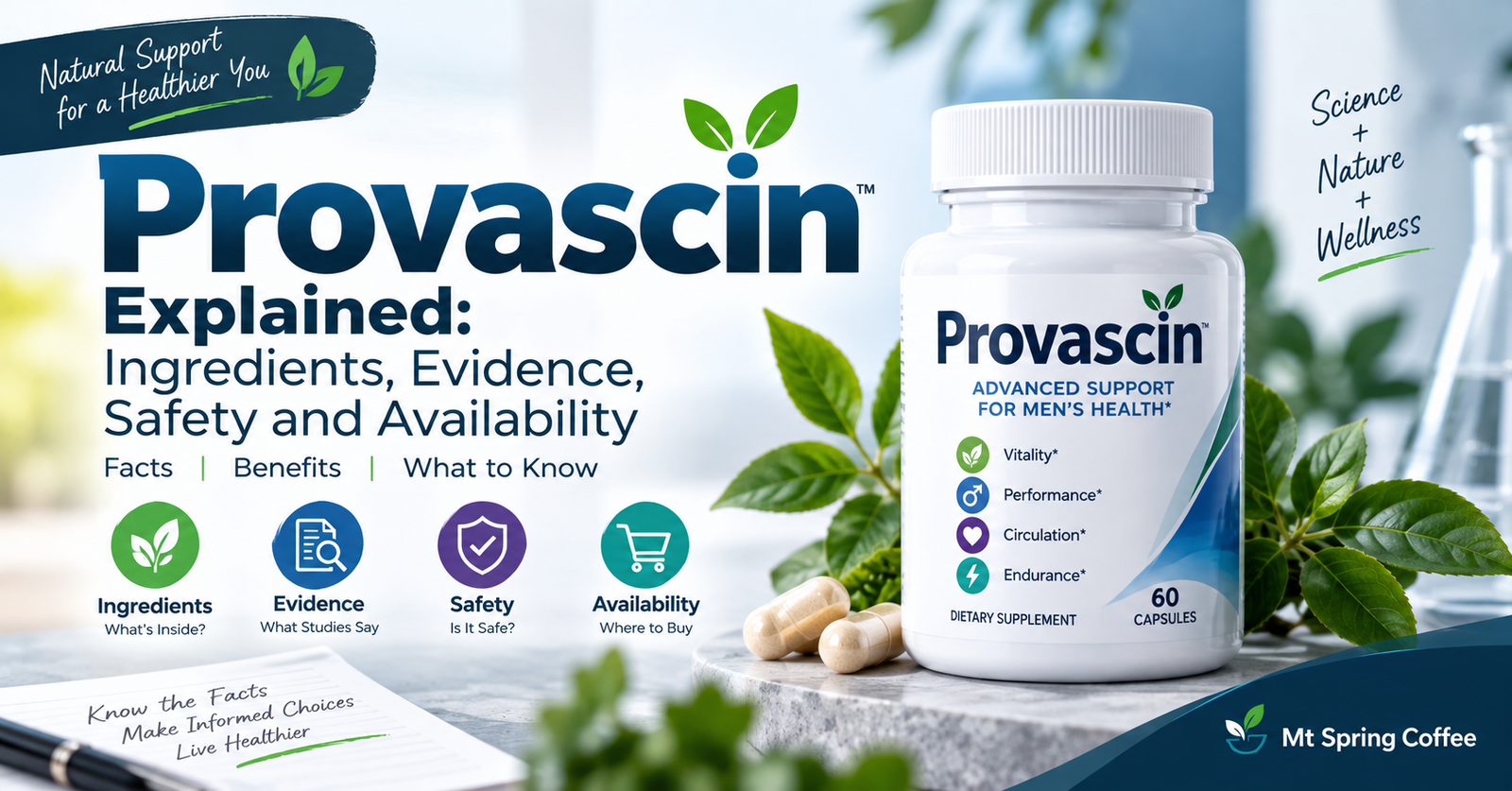
Provascin is a PURICA supplement marketed for cardiovascular support. If you are researching it, you probably want something more useful than a long list of promised benefits: what it contains, what the research supports, whether it fits with your medication, and whether you can still buy it.
There is an availability issue worth addressing immediately. As checked on September 11, 2026, Vitamart labels its Provascin listing as discontinued and unavailable. That establishes the retailer’s stated status; it does not independently confirm a worldwide manufacturer discontinuation. Vitamart product listing
The evidence also needs careful reading. Research involving a supplement ingredient cannot automatically establish that a multi-ingredient product prevents heart disease or treats a diagnosed condition. No published trial of the complete Provascin formula was verified among the accessible sources reviewed for this article. This is a research limitation, not proof that no study exists anywhere.
This guide explains the product details that could be checked, puts relevant ingredient research into context, and offers a practical way to assess the questions that remain.
What is Provascin?
Provascin is a multi-ingredient PURICA supplement sold for cardiovascular support. Its listed formula combines nutrients and extracts, including CoQ10, L-carnitine and chaga. Product descriptions establish its marketed purpose, but do not by themselves prove that it prevents heart attacks or replaces prescribed treatment. Product description and formula
The most useful starting question is your intended outcome. Someone looking for help with an abnormal cholesterol test has a different need from someone comparing supplements for exercise recovery.
Write down that goal before evaluating a product. “Support my heart” is difficult to measure. “Understand whether this is appropriate alongside my existing care plan” gives you and your pharmacist a clear decision to work through.
Provascin ingredients: what the available listing shows
Vitamart provides the following amounts per capsule. Treat these as a retailer-listed formulation, not independent confirmation of every bottle, manufacturing batch or current product version. Check the packaging before use.
| Listed ingredient | Amount per capsule |
|---|---|
| L-carnitine | 188 mg |
| Alpha-ketoglutaric acid | 125 mg |
| Certified organic micronized chaga | 125 mg |
| Coenzyme Q10 | 38 mg |
| Betaine hydrochloride | 31 mg |
| DL-alpha-lipoic acid | 13 mg |
| Grape seed extract | 9 mg |
| Green tea extract | 9 mg |
Why ingredient forms matter
An ingredient name is only the beginning of a meaningful comparison. A paper about a particular extract, chemical form or preparation does not necessarily describe the material in another supplement.
For example, do not shorten “betaine hydrochloride” to “betaine” when comparing a label against research without checking the form used in that study. Likewise, a quantity of green tea extract does not automatically tell you the quantity of a specific constituent such as EGCG.
Before treating any study as relevant, match four details: ingredient identity, preparation, daily exposure and participant population. If any of these are missing, say the comparison is uncertain.
Per-capsule amounts are not daily doses
The amount in one capsule and the amount taken across a day are different measurements. That sounds obvious, but it is an easy mistake to make when comparing product pages with research papers.
Use the instructions for the exact product and your clinician’s advice to establish your daily intake. Do not work backward from a study dose by taking extra capsules of a blend. Doing so also increases every other ingredient, including ones unrelated to the study you are reading.
What does the research say about potential benefits?
The fairest assessment separates three questions: does the ingredient have a biological role, has supplementation helped people in a study, and has the finished product demonstrated the outcome being advertised?
Those questions require different evidence. A credible explanation should make the transition between them visible.
CoQ10: promising findings in a specific clinical setting
Coenzyme Q10 participates in cellular energy production. One frequently discussed study is Q-SYMBIO, a randomized trial of 420 people with moderate to severe chronic heart failure.
Participants received either CoQ10, at 100 mg three times daily, or placebo alongside standard therapy. Over two years, the primary composite cardiovascular endpoint occurred in 15% of the CoQ10 group and 26% of the placebo group. The short-term endpoints did not show significant changes.
That is a meaningful research example, with boundaries. The study tested CoQ10 in people with established heart failure who continued standard treatment. It did not test Provascin or establish a preventive benefit for healthy adults.
The National Center for Complementary and Integrative Health describes the overall heart-failure evidence as inconclusive in its fact sheet, last updated in January 2019. It also reports that available evidence does not suggest a meaningful blood-pressure effect. This older synthesis should be read alongside later research, rather than presented as a newly issued review.
L-carnitine: a biological role does not guarantee extra energy
L-carnitine helps transport long-chain fatty acids into mitochondria for energy production. Healthy people generally synthesize enough to meet their needs.
The NIH Office of Dietary Supplements describes mixed cardiovascular findings. Some studies report benefits in particular patient groups, while other research raises questions about long-term effects and metabolism to trimethylamine-N-oxide, or TMAO. The relationship is complicated and does not establish that this specific blend causes harm.
For shoppers, the lesson is practical: “involved in energy production” does not mean “will noticeably improve my stamina.” A normal physiological function is a reason to investigate an ingredient, not a guarantee that adding more helps.
Grape seed extract: interpret blood-pressure findings precisely
NCCIH summarizes a 2022 review of 19 studies involving 1,080 participants. Grape seed extract reduced diastolic blood pressure, but the pooled analysis did not show a reduction in systolic blood pressure. Results varied across studies.
A separate review suggested possible improvements in LDL cholesterol and triglycerides, but small studies and differing product compositions limited confidence.
A headline saying simply “lowers blood pressure” would lose a useful distinction. Readers need to know which measurement changed, how consistently, and with what preparation. These findings also do not establish the effect of the amount included in Provascin.
Chaga: laboratory research has limits
Chaga, scientifically known as Inonotus obliquus, has attracted interest for antioxidant and other biological effects. Memorial Sloan Kettering’s professional summary describes preclinical findings and states that its safety and efficacy have not been evaluated in clinical studies.
Preclinical research can help identify questions for human studies. It cannot tell a shopper how much their cholesterol will change or whether they will avoid a cardiovascular event.
An attractive biological explanation remains incomplete until a relevant clinical outcome has been tested in people.
Alpha-lipoic acid and green tea extract
Alpha-lipoic acid has been investigated for diabetic neuropathy and metabolic outcomes. Memorial Sloan Kettering describes mixed or preliminary findings across several uses, with further confirmation needed for some reported benefits. That does not establish it as a general heart-disease treatment.
For green tea products, NCCIH reports small reductions in total and LDL cholesterol in research, without effects on HDL cholesterol or triglycerides. Many studies examined extracts rather than brewed tea.
Again, product composition and dose matter. A finding about one preparation should not be converted into a numerical promise for a different formula.
What about alpha-ketoglutaric acid and betaine hydrochloride?
For these components, the accessible evidence reviewed did not establish a clinical cardiovascular benefit for the listed Provascin formulation and amounts.
That is the appropriate place to leave the assessment. Filling an evidence gap with confident language about metabolism, detoxification or circulation would make the explanation sound complete while leaving the important question unanswered.
Does Provascin lower cholesterol or blood pressure?
The sources reviewed do not justify a reliable prediction of how much the complete product would lower either measurement. It would be misleading to promise a percentage reduction or a fixed time to results.
Cholesterol measures and blood-pressure readings answer different questions. “Heart health” is a broad category; evidence for one outcome does not establish an effect on all the others.
Use this comparison when evaluating a claim:
| Evidence or claim | What it can tell you | What it cannot establish alone |
|---|---|---|
| Ingredient has a biological role | A plausible research rationale | Benefit from supplementation |
| Laboratory antioxidant activity | Effects under experimental conditions | Fewer heart attacks in people |
| A biomarker improves | A measured change in the study population | Improvement in every clinical outcome |
| A controlled clinical trial reports benefit | Evidence for the tested intervention and setting | Equivalent results from a different blend |
| A customer reports feeling better | Their reported experience | Which factor caused the change |
This framework avoids both exaggeration and blanket dismissal. It allows promising findings to remain promising without turning them into guarantees.
Provascin side effects and medication interactions
Reliable product-specific side-effect frequencies were not verified. Ingredient safety information can flag questions for a pharmacist, but it cannot provide an exact risk percentage for this blend.
Blood thinners and diabetes medicines
NCCIH identifies possible interactions between CoQ10 and warfarin, as well as insulin. Memorial Sloan Kettering also flags possible bleeding risk when chaga is used with blood thinners. Do not assume that different ingredients’ effects cancel each other out.
Alpha-lipoic acid can cause low blood sugar and may compound the effects of glucose-lowering medicines. Its reported adverse effects also include nausea and vomiting.
Bring a complete list of medicines and supplements to the review. Include occasional products, since “I only take it sometimes” does not make an exposure irrelevant.
Liver considerations and other conditions
Green tea extracts have been linked to uncommon cases of liver injury. NCCIH also describes interactions involving certain medicines, including nadolol and atorvastatin. These ingredient-level findings do not establish the risk at the amount in this particular formula.
People who are pregnant or breastfeeding, children, and those with serious medical conditions should obtain professional advice before choosing a natural health product. Health Canada specifically emphasizes these groups and recommends discussing other medicines and supplements.
Provascin dosage: why a current label is essential
A trustworthy dosage section should not invent instructions when the current manufacturer label has not been independently confirmed.
If you already have a bottle, provide your pharmacist with photographs of the front panel, ingredient panel, directions, warnings, expiry date and product identifier. Ask them to assess that exact item.
If you are buying online, request those details before ordering. A product name and capsule count are not enough to establish appropriate use. Be especially cautious about advice that tells everyone with an existing cardiovascular condition to take a higher amount without an individual assessment.
Do not replace or adjust prescribed treatment to accommodate a supplement. A reasonable plan should specify the purpose of using it, relevant interactions, any monitoring, and when to review the decision.
Is Provascin discontinued, and what should buyers check?
The retailer status noted at the start should prompt confirmation directly with PURICA before purchasing remaining stock. An old listing is not evidence of current manufacturing, and a retailer’s discontinuation notice should not be interpreted as proof of a safety recall.
Ask the seller for clear answers to these questions:
- Is the exact product physically available?
- What is the expiry date?
- Can the seller provide a readable label photograph?
- Is the original seal intact?
- What are the storage and return arrangements?
- Can the manufacturer confirm the product identity if needed?
In Canada, look for the eight-digit Natural Product Number, or NPN. Health Canada explains that this identifies a licensed natural health product. Check the identifier and corresponding information in the official database; no Provascin NPN or current licensing status is asserted here because an individual record was not verified.
Authorization relates to specified conditions of use. It should not be expanded into permission to make every health claim found on a retail page.
How to read Provascin reviews without being misled
A useful review can discuss capsule size, packaging, customer service or an unpleasant experience. These details may help with a purchase decision.
Health outcomes require more care. Imagine someone who starts a supplement while also walking regularly, changing meals and taking a newly prescribed medicine. If their next test improves, a testimonial cannot isolate the supplement’s contribution.
That is an illustrative scenario, not a documented Provascin case study. Its purpose is to show why a sincere personal account can still be weak evidence of cause and effect.
Look for reviews that disclose timing, other changes and uncertainty. Be skeptical when an article uses precise success rates without identifying a study, or claims firsthand testing without explaining what was actually measured.
Provascin versus other approaches to heart health
The best comparison begins with your goal. A replacement product should not be chosen simply because its packaging also mentions circulation or antioxidants.
| Approach | Potential reason to consider it | Key decision question |
|---|---|---|
| Multi-ingredient supplement | Convenience of combined ingredients | Are all components relevant and compatible with your medicines? |
| Single-ingredient supplement | Easier comparison of formulation and dose | Is there useful evidence for your particular goal? |
| Clinician-directed treatment | Management of a diagnosed condition | What benefits and monitoring apply to you? |
| Heart-healthy daily habits | Long-term risk reduction | Which practical changes can you maintain? |
The National Heart, Lung, and Blood Institute emphasizes knowing your risk, choosing healthy foods, being active, maintaining a healthy weight, avoiding smoking, managing stress and getting sufficient sleep. These remain central to cardiovascular care.
An expensive product is not automatically a more useful choice. Consider the cost of continued use, the clarity of the evidence and the effort required to monitor an outcome. If the reason for taking it remains vague after review, reconsider the purchase.
A practical checklist before making a decision
Start with one sentence: “I am considering this product because…” If that sentence names a symptom or abnormal test, use that as the starting point for a healthcare discussion.
Then work through five steps:
- Confirm identity. Match the brand, label and product identifier.
- Define the goal. Separate curiosity from a specific clinical need.
- Check relevance. Ask whether supporting research tested the same intervention and outcome.
- Review compatibility. Include prescriptions, nonprescription medicines and supplements.
- Set a review point. Agree on what would count as benefit, what problems to report and when to reassess.
For example, someone mainly worried about an abnormal cholesterol result can bring the laboratory report and product label to the same appointment. This keeps the discussion focused on their actual risk and care plan, instead of a generic promise of better circulation.
The strongest reason to buy a health product is a clear, evidence-informed purpose. A recognizable ingredient list alone is not enough.
Frequently asked questions
Is Provascin clinically proven?
A published trial of the complete formula was not verified in the accessible sources reviewed. Studies of its individual ingredients should not be presented as clinical proof for the finished product. Ask anyone making that claim to identify the exact publication.
How long does Provascin take to work?
No verified product-specific evidence establishes a dependable onset of benefit. The relevant timeframe would depend on the outcome, formulation and individual circumstances. Avoid promises that everyone should notice a result within a set number of days.
Can Provascin replace a statin or blood-pressure medicine?
The evidence reviewed does not support making that substitution. Do not stop or change a prescription based on product marketing. Discuss the underlying reason you want an alternative, including side effects, cost or concerns about long-term use, with your prescriber.
Is Provascin safe because its ingredients are natural?
Natural origin does not establish safety for every person. Ingredients can interact with medicines, and a combination adds several exposures at once. The medication and condition checks described above are more useful than treating “natural” as a safety guarantee.
Are ingredient studies useless when evaluating a blend?
No. They help identify plausible benefits, uncertainties and potential interactions. Their limitation is that they do not directly test the complete blend. Good evaluation uses them as relevant background and clearly identifies the questions they leave open.
What should I ask a pharmacist about Provascin?
Ask: “Does this exact formula fit my goal and medication list, what evidence applies to me, and what should I monitor?” Bring the bottle or clear label photographs. This gives the pharmacist enough detail to assess the product rather than its name alone.



One thought on “Provascin Explained: Ingredients, Evidence, Safety and Availability”